Converts
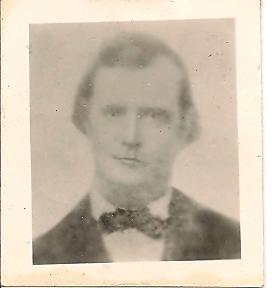
John Moss
Birth
Monday, Mar 6, 1820
Newton, Yorkshire, England
Baptism2
Wednesday, Mar 27, 1839
Waddington, Yorkshire, England
Age: 19
Baptized by: David Moss (Uncle)
Death
Monday, Aug 4, 1884
Woods Cross, Utah, USA
Burial: Bountiful, Utah, USA
Age: 64



Moss, John, an active Elder in the South Bountiful Ward, Davis county, Utah, was born March 31, 1820, at Newton, Yorkshire, England, the son of Hugh Moss and Elizabeth Rushton. He emigrated from England to America in 1835 and settled in Illinois. In March, 1844, he married Rebecca Wood (daughter of Daniel Wood and Mary Snyder), who was born May 11, 1826, at Lohara, Canada; she bore her husband twelve children and died March 4, 1882. Bro. Moss migrated to Utah in 1848, crossing the plains in Brigham Young’s company with his wife and two children (Mary and Daniel). He settled in Bountiful, Davis county, in 1849, where he took an active part in building up that part of the country. While a resident of Bountiful he was ordained a president of the 76th quorum of Seventy; later he was ordained a High Priest. In 1865 (March 25th) he married Emma Alexander, who bore him eight children. In 1856 he went out with many others to meet Edward Martin’s handcart company. His avocation was that of a farmer and stockraiser, being specially interested in the sheep business. Bro. Moss died August 4, 1884, leaving a wife and eighteen children to mourn the loss of a loving and respected father. Altogether he was the father of twenty children and had 27 grandchildren at the time of his demise.3
The trip across the Atlantic Ocean was long and tedious, and after landing, he wended his way across the very rugged and sparsely populated states to Nauvoo, Illinois, where the body of the Saints were located with the Prophet Joseph Smith as their Prophet and Seer.
John passed through all the trials that the Saints passed through during the next four years. This was a great period of growth and persecution for the Saints in Nauvoo and surrounding territory. From 1840 to 1844, the Church grew in numbers and prospered greatly; and they continued to receive their usual terrible persecution. It was during this time that the Nauvoo Temple was in the process of being built. The Prophet was hunted and his life threatened. The Prophet gave the word that the Saints were to prepare to make a move. This time to the West… to the Rocky Mountains. On the 27th of June, 1844, the Prophet was martyred which left his people without their leader.
In the early part of 1844, John was living in Pike County, Illinois, which is southeast of Nauvoo. He lived with a man and his family by name of Daniel Wood, who was president of the branch of Saints in that territory. John fell in love with oldest daughter Rebecca. They were married, 4 January 1844. (Photostatic copy of marriage license in possession of Cousin Pauline Guff Foutz.) On the 16th of November, 1844 their first child was born. She was called Mary after her grandmother Mary Snyder Wood. John and Rebecca cast their lot along with Rebecca’s father and family; and during the next year they suffered in sickness and persecution. Rebecca’s brother Henry died in 1845. His death was due to exposure and inclement weather while guarding the family and Saints from the mobs. Henry was sixteen years of age. He was taken to the Nauvoo burial grounds and buried by the side of his little twin sisters, Catherine and Mary, who died in 1842.
After a few months they were driven from their home in Pike County, Illinois. They went over to Nauvoo where they stayed a short time while preparing to make the great move West. (Daniel Wood’s Diary in Church Historian’s Office.)
Enough provisions were gathered to last one year. The two families had collectively gathered four wagons, four yoke oxen, and four or five cows. By the month of April 1846, the Saints commenced to leave Nauvoo-fleeing from the mob which later drove the remnants out and took forcible possession of the city. The Temple was hurriedly dedicated on the 6th of May, 1846; and the Saints crossed over the Mississippi River. They crossed to the State of Iowa, to Omaha and Winter Quarters. (Church Chronology, P. 28.)
Through the years, in writing this sketch of Grandfather John Moss, whom I was never privileged to know in his life time, for he passed away before I was born, I have grown to feel I know him very well. I have sought to glean the facts concerning his life from old records and from members of his own family, church history, and etc., and to put them in order, he has many times seemed very close and near to me. I have come to appreciate the splendid man he must have been and as his obituary stated, which was published in the Deseret News at the time of his death, “He had lived and labored diligently for the cause of truth till the time of his death. To know him was to respect him. May he rest in peace until the morning of the first resurrection.” We can never say a history is full and complete until it has been confirmed by the person of whom the history is written, and I am sure much more could be said of the life of this great man if we knew all of the facts. More than one hundred and eighty years ago there lived in the town of Goosnargh, Lanes, England, a farmer by the name of Robert Moss who was born 14 August 1774. At that time, England was under the rule of King George III, a very moral but stubborn King. Agriculture was the principle industry of England, and the land holding class of people exercised the strongest influence over the government. This same year that Robert was born, the colonies over in America were determined to free themselves from England-their mother country. It was in September of this year that the first “Continental Congress” assembled. Here the resounding “Liberty Bell” clanged out to all the world America’s Declaration of Independence! For the first ten years of Robert’s life, England knew a great deal of trouble with America, Spain and Ireland. Many freedom loving people in England had left its shores for America. They were called the Pilgrims. Robert was married 6 February, 1794, to Margaret Kelsall, who was bom 16 November, 1771. They both lived to the age of 71 and 76 respectfully. To them was bom 4 July, 1794, a son whom they called Hugh. As he grew to manhood he married on 26 December, 1818, Elizabeth Rushton, who was bom 20 April, 1796; and like his father, he followed the vocation of the agriculturist. He became forest steward for the Townleys. Five Daughters and five sons were bom to them. John, Robert, William, Henry and Joseph. Elizabeth, Margaret, Mary, Mary Ann and Jane. John and Robert, in due course of time, left England and came to America to live and make their home. John coming first and Robert later… both finally settling and making their homes at Bountiful and Woods Cross, Utah. John of whom this sketch is written was the oldest child of Hugh and Elizabeth, and was bom 6 March, 1820, at Newton, Yorkshire, England. Over in this new land of America, where men were permitted to worship according to the dictates of their own conscience, a new religion came forth by divine revelation to a man by the name of Joseph Smith. He organized and established the “Church of Jesus Christ of Latter-day Saints” on 6 April 1830. A few years later the missionaries were sent out into the world to proclaim this Gospel. The first missionaries were sent to England in 1837. In the Church Historian’s Office, F-C 82,7 Seventies Quorum Genealogical Records Pt. 3 Record of members 25th Quorum Page 36, we find John Moss registered in that record as follows: John Moss, Nauvoo, October 27,1845. Bom in Newton in Yorkshire, England. John Moss who was the son of Hugh Moss, who was the son of Robert Moss who was the son of Hugh, was baptized in the spring of 1840 by David Moss. The record goes on to say that John was ordained into the 25th Quorum of Seventies on the 9th of April, 1845 in Nauvoo, Illinois. David Moss was the son of Robert Moss and Margaret Kelsall. Three members of that family joined the Church and came to Utah. William, Thomas and David. William is the Genealogical heir in our family research because he was the first Moss to be baptized. These men were John’s uncles. John was numbered with one of the first groups of Saints that came to this country for the sake of the restored Gospel. We do not know which company or ship as some of the earliest records are lost and names of individuals were not always recorded, only the names of the captains who had charge of the various groups. As time went on, thousands of people came to the United States for the sake of the gospel. The trip across the Atlantic Ocean was long and tedious, and after landing, he wended his way across the very rugged and sparsely populated states to Nauvoo, Illinois, where the body of the Saints were located with the Prophet Joseph Smith as their Prophet and Seer. John passed through all the trials that the Saints passed through during the next four years. This was a great period of growth and persecution for the Saints in Nauvoo and surrounding territory. From 1840 to 1844, the Church grew in numbers and prospered greatly; and they continued to receive their usual terrible persecution. It was during this time that the Nauvoo Temple was in the process of being built. The Prophet was hunted and his life threatened. The Prophet gave the word that the Saints were to prepare to make a move. This time to the West… to the Rocky Mountains. On the 27th of June, 1844, the Prophet was martyred which left his people without their leader. In the early part of 1844, John was living in Pike County, Illinois, which is southeast of Nauvoo. He lived with a man and his family by name of Daniel Wood, who was president of the branch of Saints in that territory. John fell in love with oldest daughter Rebecca. They were married, 4 January 1844. (Photostatic copy of marriage license in possession of Cousin Pauline Guff Foutz.) On the 16th of November, 1844 their first child was born. She was called Mary after her grandmother Mary Snyder Wood. John and Rebecca cast their lot along with Rebecca’s father and family; and during the next year they suffered in sickness and persecution. Rebecca’s brother Henry died in 1845. His death was due to exposure and inclement weather while guarding the family and Saints from the mobs. Henry was sixteen years of age. He was taken to the Nauvoo burial grounds and buried by the side of his little twin sisters, Catherine and Mary, who died in 1842. After a few months they were driven from their home in Pike County, Illinois. They went over to Nauvoo where they stayed a short time while preparing to make the great move West. (Daniel Wood’s Diary in Church Historian’s Office.) Enough provisions were gathered to last one year. The two families had collectively gathered four wagons, four yoke oxen, and four or five cows. By the month of April 1846, the Saints commenced to leave Nauvoo-fleeing from the mob which later drove the remnants out and took forcible possession of the city. The Temple was hurriedly dedicated on the 6th of May, 1846; and the Saints crossed over the Mississippi River. They crossed to the State of Iowa, to Omaha and Winter Quarters. (Church Chronology, P. 28.) For three years and six months after the death of the Prophet Joseph Smith, the Quorum of the Twelve with Brigham Young as its head, presided over the Church. While the Apostles were at Winter Quarters in 1847, they called a special conference of the Church to convene on December 24 and 27 at Kanesville, Iowa, to consider sustaining a leader to succeed Joseph the Prophet. The newly built log chapel, 45 by 60 feet, was rushed to completion for this important occasion, was crowded to capacity. On December 27th, Brigham Young was unanimously sustained President of the Church, with Heber C. Kimball as first counselor and Willard Richards as second counselor. These appointments were subsequently ratified at the various conferences of the Church; both in America and in foreign lands. (The Kingdom of God Restored", Ch 71, Page 441.) This incident happened upon President Brigham Young’s return from the first trip across the plains to the Salt Lake Valley. While the body of the Saints were gathered at Winter Quarters (1847), they were organized into companies of hundreds, fifties, and tens; and the long tedious journeys began to the Great Salt Lake. Brigham Young moved out with his first picked company of 143 men, 3 women, and 2 children, who blazed the trail for that great exodus of people who were to come later. This company arrived in Salt Lake City, July 24,1847. Daniel Wood and John Moss had been asked by President Brigham Young to stay behind to plant, harvest, and store food for the Saints who would come later. At this time, when these two families were at Winter Quarters or at Council Bluffs as it is now called, it consisted of 583 log houses, 83 sod houses and 4,000 Saints. It was here on the 21st of January, 1847, that Rebecca gave birth to a son called Daniel. When he was 18 months old they began the journey across the plains. Brigham Young had returned from his first trip the year before, and was now leading the second company to Zion. The Saints had moved on and had met him at Elkhorn, with a picked company consisting of 1,229 souls and 397 wagons. Our two Grandfathers and their families were in the company. This was May 26,1848. (Church Chronology, Page 35.) Grandmother Rebecca took her small daughter Mary by the hand and wrapped her baby Daniel in her apron and carried him all the way over almost trackless desert, thru rivers and up the steep mountains. John and Rebecca arrived in Salt Lake Valley on September 20,1848. As they came up over the mountains and looked down over the valley, they could see some 450 huts of log and adobe and more than 5,000 acres of land that had been cultivated and put into crops. But where were the bounteous crops they had expected to see? They soon learned that the plague of black crickets had devasted the crops, and in their stead they saw remaining the scant vegetation the Seagulls had saved from the devouring pests. For the next twelve months they lived on rations of the Sego Lily root, and cooked and ate raw hides. (Church History, Levi Edgar Young.) The winter of 1848-49, was a severe one. By Christmas, there was 18 inches of snow. Horses and cattle suffered greatly, and many starved or froze to death. The faith of the Saints was sorely tried. Some of them grew weak and wanted to return. Many nevertheless were willing to suffer all things for the Gospel’s sake and for the testimony of Jesus. Heber C. Kimball records, “Nearly every man was dressed in skins and all were poor, destitute and distressed yet we felt well.” (Kingdom of God Restored by Carter E. Grant.) Not long after they arrived in the valley, another child named Elizabeth was born 7 June, 1849, but she died 19 July, 1849, of Whooping Cough and was buried in Salt Lake - we do not know just where. Then they traveled north about 8 miles and there John and Rebecca chose a tract of land which was later identified as being situated a quarter of a mile south of Woods Cross where stands the Oregon Short Line Depot. Their property was on the west side of the street. This property was near Grandfather Daniel Wood’s homestead on the northeast of the O.S.L. depot. The land was soon cleared and the crops planted which were badly needed for food. John made a temporary shelter in the brow of the hill at the location described. John lined the dugout with split rock- - held together with mud mortar. With the sides and back rocked, poles could be laid across the top from wall to wall; then willows and branches covered over the poles. Earth was shoveled on top the willows to a depth of about one foot or more. The floor remained trampled earth and a blanket or wagon cover served as a door. Rebecca was happy to make her bed in this shelter. The shelter was completed in time for the fourth child which was bom 10 August, 1850. Joseph was said to be the second white child to be bom in this locality. (History of Joseph Moss by Nina F. Moss.) John had learned from his father-in-law, Daniel Wood, the value of fertile earth and so was happy with his homestead. Rebecca made no complaint as to the facilities granted her, but assisted in every way to help establish a home. John got out fire wood and logs from the canyon and built a small log and adobe home on top the rise in the ground nearer the street. The floors were bare lumber at first and it took much hard work to keep them scrubbed and clean. Many things happened in this little log cabin that would have been of interest to us, but other than the births of other members of the family we haven’t much of a record. The fireplace at the north end of the family room was used for cooking, heat, and light. (A daughter Ella M. Hatch.) How the time flew the next few years. John’s work was the work of a pioneer. Clearing sagebrush, plowing and tilling the soil, planting, fighting grasshoppers, hauling logs, helping to build schools, places of worship, hauling stones from the canyons to build our Bountiful Tabernacle and our great Temple in Salt Lake City. Many times he walked to the canyons with his little son Daniel at his heels, barefooted to get out wood with only a molasses sandwich in his pocket to eat. Many times the little boy ran along side of the oxen with a whip to keep them going while his father or mother guided the plow. (A son Daniel.) The labor of his hands prospered and soon the soil started to produce. Com, wheat, potatoes were the main crops. Soon the flocks and herds began to multiply. As the family increased there was bom to them three more daughters and five more sons - making a total of twelve children: Mary Moss Moyle, bom 16 November, 1844 Died 22 January, 1921 Daniel Moss, bom 21 January, 1847 Died 27 January, 1925 Elizabeth Moss, bom 7 June, 1849 Died 19 July, 1849 Joseph Moss, bom 10 August, 1850 Died 31 December, 1934 John Hugh Moss, bom 10 August 1852 Died 22 November, 1920 William Moss, bom 21 June 1855 Died 8 November, 1933 Moroni Moss, bom October, 1857 Died 9 December, 1921 Rebecca Jane Moss, bom 30 January, 1860 Died 28 May, 1873 Ellen Moss Hatch, bom 3 June, 1862 Died 16 November, 1938 Nephi Moss, bom 7 September, 1863 Died 31 October, 1919 Alice Moss Egan, bom 20 November, 1866 Died 8 August, 1923 Henry Moss, bom 15 November, 1869 Died 25 October, 1933 On the 10th of November, 1855, John and Rebecca went to the Endowment House and obtained their Endowments and Sealing. During this period of years the Church was upholding the practice of plural marriage. President John Taylor gave a message to the people asking every man in good standing in the church and who was financially able, to enter this practice. So John, obedient to those placed over him, met and married a lovely young woman convert, just over from England, by the name of Emma Alexander. She was bom 14 April, 1846, at Colne, Wiltshire, England, daughter of Able Alexander and Sarah Alexander (cousin). She bore him the following eight children: David A. Moss, bom 8 January, 1867 Died 28 December, 1950 Alma Moss, bon 21 December, 1868 Died 27 June, 1928 Sarah Ann Moss, born 13 September, 1870 Died 30 July, 1871 Evelin Moss, born 14 June, 1872 Died 30 August, 1909 Alexander Moss, born 6 June, 1874 Died 5 December, 1946 Robert A. Moss, born 15 April, 1876 Died 4 March, 1946 Steven Moss, bom 30 March, 1879 Died 6 September, 1953 Margaret Moss Grant, bom 5 November, 1882 Died 11 December, 1952 This made John Moss the father of twenty children. The homestead was enlarged to accommodate the new family; each mother having her own apartment. Emma emigrated to Utah, 26 October, 1846, and was married to John in the Endowment House a year later on the 25th of March, 1865. She was a good faithful mother, wife and church worker. An earnest worker in the Woman Suffrage movement. She was a faithful choir member and loved to stand and bear her testimony in song and word. She was left a widow at the early age of thirty-seven to rear her seven children alone. David, her oldest son, was only 17 Vi years of age. She worked hard to support them. Two of them filled missions for the Church. She was always ready to help her neighbors in sickness, serving, and canning fruit, or however they may have needed help. She died at the home of her son Steven in Woods Cross, 11 January, 1922 at the age of seventy-six years. (A daughter Margaret M. Grant.) We have been told that John Moss brought livestock to Utah with him, but there is no record of the exact number. However, we know that he appreciated their value and took care of their increase. As soon as his two oldest sons, Daniel and Joseph, were old enough to help with the care of the animals, they were given this responsibility. Many of the neighbors had brought stock with them also, and so the boys of the different families were given turns at the herding. In the spring they found forage in the hills south of the settlement, but in the fall the cattle were taken to the Jordan River bottom land. The family depended mostly on the products from the livestock for food and clothing. At first John used this public land for forage for his stock. He and his boys got out logs and poles with which they enclosed a space for corralling at time of branding, lambing and shearing. A log house was built at this enclosure, which was located on the property where the Orchard Ward Chapel, South Davis Stake, now stands. After the shearing, the wool was taken to Becks Hot Springs where it was washed in warm water. Later, due to the increase in population, John purchased this property. On Page 786 of the Davis County Deeds, at the Farmington Courthouse, you will find that on the 24th of January, 1880, John Moss bought forty (40) acres of land from the Union Pacific Railroad Company., The corral and house previously mentioned were located on this forty acres. (From Joseph Moss History by Nina F. Moss.) As the flocks and herds increased, John divided his livestock with his sons, and soon there was a number of small herds. It occurred to him that if these herds were combined, that the one large herd, which was mostly sheep, might be taken care of much more easily and much cheaper. As he pondered this over in his mind and talked it over with his sons and a neighbor, Oren Hatch, it was agreed that their sheep should be pooled and an organization was formed called the Moss Hatch Sheep Company. By the year 1889, all the families could see the benefits to be derived by consolidating their herds and therefore applied for and received incorporation papers in 1891. They registered as the “Deseret Livestock Company” with John H. Moss, president; James I. Atkinson, vice-president; Oren P. Hatch, Secretary; Steams Hatch, Treasurer; and James Howard, William Moss, Jens Nelson, John E. Hatch, Moroni Moss, James H. Moyle and others were appointed directors to form the nucleus of what later became a nationally known institution. This organization was formed and carried on a number of years without a dollar in cash. At the time of its incorporation it was valued at $90,000. In 1952, the company was valued at more than $5,000,000. John and his son William were the first persons to take sheep out on the Wasatch Range to feed. William, then only a small lad, trudged all the way barefooted. William later became president of the company and held this office for many years. All of his sons were large stockholders in the organization. John obtained a large tract of land in Silver Creek country where he started a dairy where he made cheese and butter. (Memories of Daniel Moss, a son.) When President Young made a survey to build a branch of railroad from Salt Lake City to Ogden in 1869, it was found to run directly through the John Moss property. John was much concerned as were other members of this community, to learn that their farms would be included in the line of survey, but it was a great experience for the family to see the train for first time from their own door. (Joseph Moss History by Nina F. Moss.) In November 1856, he was sent back to help the Edward Martin Handcart Company who had suffered extreme hardships. Many of the emigrants had died in the mountains and the handcarts had to be gradually abandoned as the relief teams from the valley were met. John furnished his own teams, provisions and wagon for this trip. (William A. Lund in Historian’s Office.) John and his Daniel helped to haul the great granite stones from Little Cottonwood Canyon to build the walls of the Salt Lake Temple. These trips took from two to three days with four yoke of oxen. The great stones were slung by chains between running gears of a huge wagon made for this purpose, and brought down the steep mountain side. In the same year 1857, the United States Government sent Johnston’s Army across the continent to put the Territory of Utah under Martial Law. Reports had reached Washington, D.C. that the people of Utah were in open rebellion against the laws of the United States. When Governor Young was informed of the approach of the Federal Troops, he called a council of the leading men for the purpose of determining what course would be followed. The Mormons had already been driven from their homes three and four time while residing in the East. President Young said to the people, “Before I will suffer what I have in times past, there shall not be one building, nor one foot of lumber, nor a stick nor a tree, nor a particle of grass and hay that will bum, left in reach of our enemies. I am sworn to utterly lay waste this land in the name of Israel’s God, and our enemies shall find it as barren as it was when we came here.” (Utah and Her People, Page 301-2 by Milton R. Hunter.) Thirty thousand Saints deserted their homes and started South. John and Rebecca prepared to leave along with the others. When they were ready, Rebecca and her six children, Mary, Daniel, Joseph, John, William and Moroni climbed into the wagon. Daniel being the oldest son and eleven years of age, took up the whip to drive the oxen and the wagon with its precious cargo, leading all the livestock they owned. They went as far as Springville (60 miles) where he with his mother and the other children lived that winter. Daniel herded the cows, cared for the stock, and helped care for his mother and brothers and sister. This was in 1857 and 1858. When word came that it was safe to come back, they packed their wagon and traveled safely home. Daniel made two more trips back that fall to bring household goods and livestock. (Memories of Daniel Moss, a son.) We have no way of knowing how John spent this year. Perhaps back and forth between Bountiful and Springville, - looking after property and livestock. John filled many important assignments in his Church. He honored his Priesthood and filled many important appointments in the same. (Biographical Encyclopedic History of the Church, Vol. 30, Page 169.) He was ordained as one of the Seven Presidents of Seventy in the 76 Quorum R9B29, Encyclopedic History of the Church, Page 811. He was ordained into the 25th Quorum of Seventies, 9 April, 1845. Later he was ordained a High Priest. (Church Historian’s Office, F-C 82,7 Record No. C.R. Seventies, Page 87, BKB Genealogical Library.) In early days many members of the Church had several baptisms. Records were kept of these baptisms and the dates can be found in the Genealogical Library. John’s first baptism was of course in England 1839. The second time a re-baptism 25 February, 1849, in Salt Lake City by Orville S. Cox and confirmed the same day by George Mayer. The third time 27 March, 1857 in South Bountiful by John McCarthy and confirmed by John Stoker. As the newly planted seeds shot forth green life from freshly cultivated soil, President Young instructed that they likewise were to take on a newness of life thru a renewal of their covenants. They were to prove their loyalty by being rebaptized. This reformation movement continued in the Church for a number of years. It not only remitted sins and renewed covenants, but it supplied many members a new record sheet, the old ones having been lost. (Kingdom of God Restored, Page 434.) At one time, before Bountiful was divided into three wards Bountiful, South Bountiful, and West Bountiful, John was appointed Presiding Elder over the part called South Bountiful. Rebecca and John went to the Endowment House, 10 November 1855, for their own Endowments, The Salt Lake Temple was not dedicated until 1893. On 11 March, 1890, Mary, Daniel, Joseph, John and William journeyed to the Logan Temple with their wives to be sealed to their Mother and Father. One of the wives of these boys stood proxy for Elizabeth who had passed away in her infancy. All the other children of John and Rebecca were bom after their sealings in the Endowment House. These six couples did baptisms and endowments for many of their kin, who had lived and died in England. (Book A, Page 802.) Rebecca passed away at her home in Woods Cross, 4 March 1882, of Typhoid Pneumonia, at the age of 56 years. Death seemed to come early in life to many of these Pioneers. Perhaps because of the hardships that many of these wonderful people suffered thru their lives. John was tall, dark complexion and blue eyed-quiet and serene in all his actions. A loving parent and a good provider. He left a numerous posterity - all of whom are honorable and respected citizens who love and revered his name. Hundreds of his decendents have been called to fill missions for the Church and many have been called to labor as Bishops, Bishop’s Counselors, Stake Presidents, High Councilmen, and etc. Many of his decendents are set apart Temple Workers. His posterity today, 1960, are numbered into the thousands. One of his last acts was to call his daughter Ella to his bedside that he might give her infant daughter Clara, a name and a blessing. At the time of his death, there appeared in the Deseret News this obituary. We are indebted to Marie Porter Grachan for this wonderful contribution to our Grandfather’s life history. “John Moss departed this life, Monday, 4 August, 1884, at his residence in South Bountiful, Davis County, Utah. He was taken down with Cholera Morbus about ten days previous which soon prostrated him, but during his illness his mind was perfectly clear, as shown by the manner in which he settled his affairs making a fair and equitable distribution of his property to the remaining members of his family, and also by taking each member of his family separately, giving them good and wise council. He seemed to know from the first that his earthly career was at an end. He was a true and faithful Latter-day Saint. Full of integrity, faith, and good works. He took pleasure in living according to all the laws of the Gospel. He was the father of twenty children and twenty-seven grandchildren. His wife Emma survives him. “Brother John Moss was born in Newton, Yorkshire, England, 6 March, 1820. Embraced the Gospel at Waddington, England. Emigrated to America in 1840. Passed thru persecutions which the Saints in early history went thru. Came to Salt Lake Valley in 1848, where he lived and labored diligently for the cause of truth until the time of his death. He leaves a wife and eighteen children to mom the loss of a loving and respected father. “To know him was to respect him, and his host of friends will miss him and his friendly council. “Funeral services were held in the South Bountiful Meeting House. Apostle Brigham Young preached the funeral sermon which was full of comfort and consolation to the bereaved and edifying to all. “Brother John W. Young also offered words of comfort to the living. President Anson Call and Bishop Brown spoke of their long acquaintance and of his labors in the Settlement; and gave him such a character that any Saint would be proud of. May he rest in peace until the morning of the first Resurrection."4
Sources
1 Black, Susan Easton, compiler. Membership of The Church of Jesus Christ of Latter-day Saints, 1830–1848. 50 vols. Provo, Utah: Brigham Young University Religious Studies Center, 1989. Private Donor. https://www.ancestry.com/search/collections/5333/records/64158?gsfn=John&gsln=Moss&ml_rpos=1
2 Notice of Deaths, Millenial Star Sep 15 1884, No 37 Vol XLVI, p.576, Google Books, “Moss - At South Bountiful, Davis Co., Utah, August 4, 1884, John Moss; born in Newton, Yorkshire, Eng., March 31, 1820; embraced the Gospel in 1839 at Waddington, and emigrated to America in 1840”. Note that the birth date is contested between this and other sources.
3 Jenson, Andrew. LDS Biographical Encyclopedia: A Compilation of Biographical Sketches of Prominent Men and Women in the Church of Jesus Christ of Latter-day Saints. Salt Lake City, UT, USA: Andrew Jenson History Co., 1901. https://www.ancestry.com/search/collections/2028/records/2228?tid=&pid=&queryId=ed4b1e00-1382-4c3c-9f56-fbdbff4349b5&_phsrc=DbY1&_phstart=successSource
4 A SHORT SKETCH OF THE LIFE OF JOHN MOSS. Written and compiled by-Leila Moss Grant Eldredge and Marie Porter Grachan (1938-40). Rewritten and printed in 1960.

Copyright © 2009-2026, Dave Lyon. All Rights Reserved